The Order of Things: A Fourth of July Reflection on Freedom and the Most Vulnerable
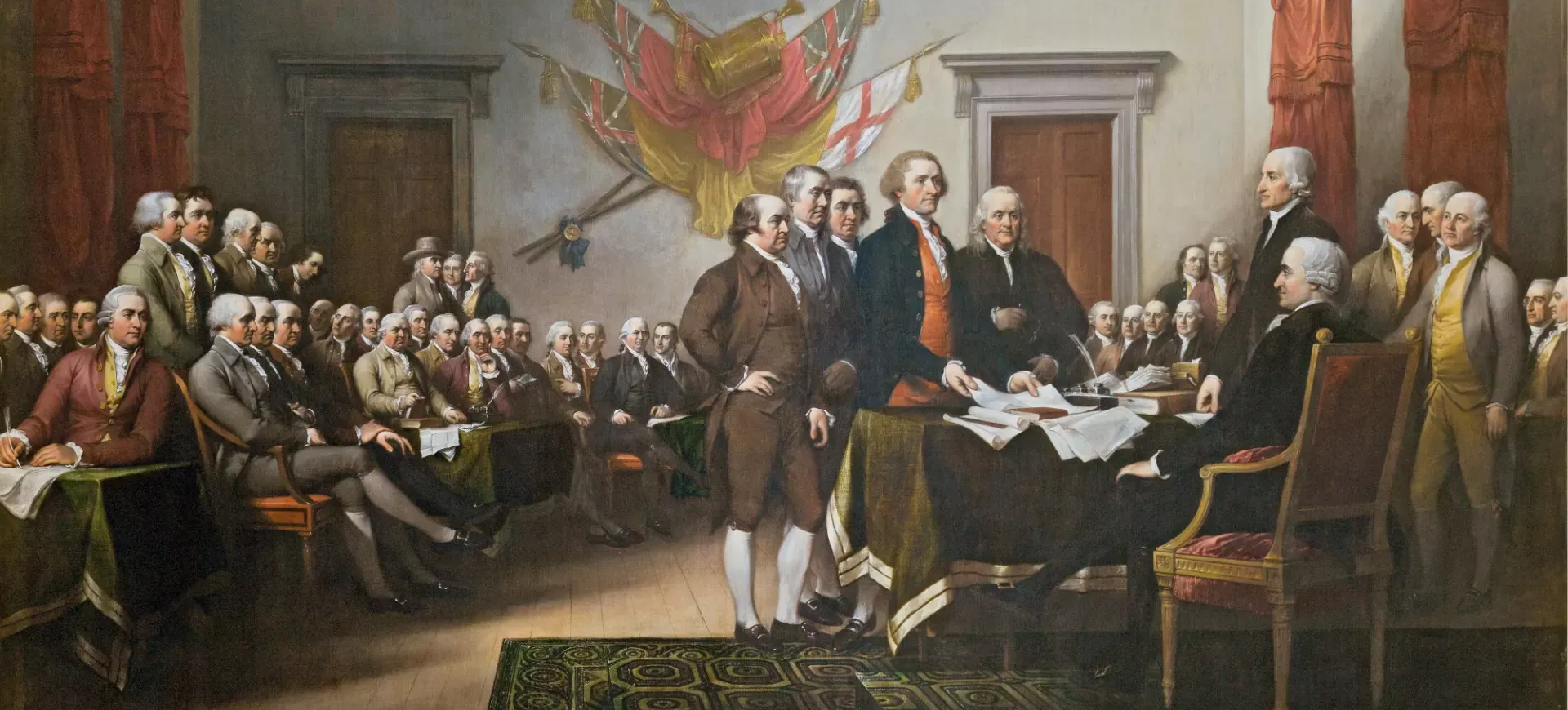
"We hold these truths to be self-evident, that all men are created equal, that they are endowed by their Creator with certain unalienable Rights, that among these are Life, Liberty and the pursuit of Happiness." — The Declaration of Independence
Two hundred fifty years. That's what we're celebrating this Fourth of July — half a millennium of an experiment in self-governance founded not on the authority of kings or the mood of the moment, but on something older and harder than either: the idea that human rights are not granted by governments. They are recognized by them. And when they aren't, something has gone wrong.
The Founders understood something we seem determined to forget: Those rights arrive in a specific order, and that order is not accidental.
Life. Then liberty. Then the pursuit of happiness.
This isn't a ranked list of preferences. It's a logical chain. You cannot exercise liberty if you don't have life. You cannot pursue happiness if you aren'tfree. Each right depends on the one before it. The first one — life — is the load-bearing wall. Remove it, and the whole structure collapses.
No other nation on earth is built the way we are built. No other founding document grounds human rights in the Creator rather than the government. No other country has embedded in its DNA the radical proposition that the vulnerable are not exceptions to the promise — they are the test of it.
For 250 years, this nation has been in the ongoing act of living up to its own founding — extending the promise, fighting for it, and writing amendments to clarify and protect it. That arc is the story of a people serious enough about their principles to be held accountable to them.
But the truth is, we still have work to do, and nowhere is that work more urgent than for children with Down syndrome. The Founders didn't write "all citizens" or "all who meet a certain threshold of independence." They wrote "all men" — a category with no asterisk, no capability requirement, no fine print. And yet in this country, prenatal screening has become, in too many cases, a sorting mechanism. This isn't a feeling or an isolated story; the pattern is well documented and widely studied. The diagnosis arrives, statistics are presented without context or hope, and a decision is made to deny life to a child with Down syndrome — not because he isn’t fully human, but because his life, in someone's calculation, doesn't qualify for the full protection of the rights we claim to hold self-evident.
The order is broken. Life is denied, and liberty is lost before it ever had the chance to be exercised.
And this nation is better than that — because it is built to be.
Philosopher John Finnis argues that the life of every human being must be respected as a good belonging to the person — not merely a good of society or the state. That's the same truth the Declaration asserts. Life belongs to the person, and its value isn't determined by usefulness, convenience, or condition.
But the Declaration also raises a deeper question, one philosophers and theologians have wrestled with for centuries: What is liberty for?
True freedom, properly understood, is not the power to do whatever you want without restraint. That's not freedom; that's appetite. True freedom is the power, rooted in reason and will, to choose the good. It finds its fullness not in the removal of all limits but in the choosing of what is true, good, and beautiful, even when it costs something.
By that measure, a nation that allows its most vulnerable to be sacrificed at the altar of convenience is not exercising freedom. It is surrendering it.
I haven't chosen Down syndrome as an illustration to make a point land harder. It is, right now, the population for whom this principle is most acutely and most presently being tested, which is exactly why I can't write this without writing about my son.
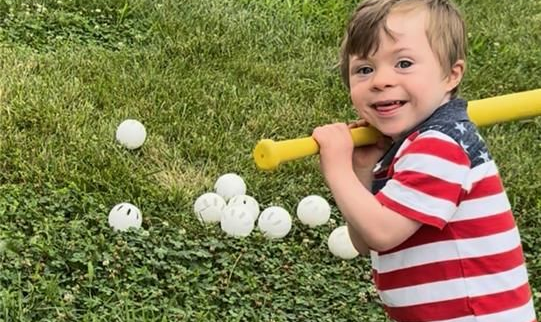
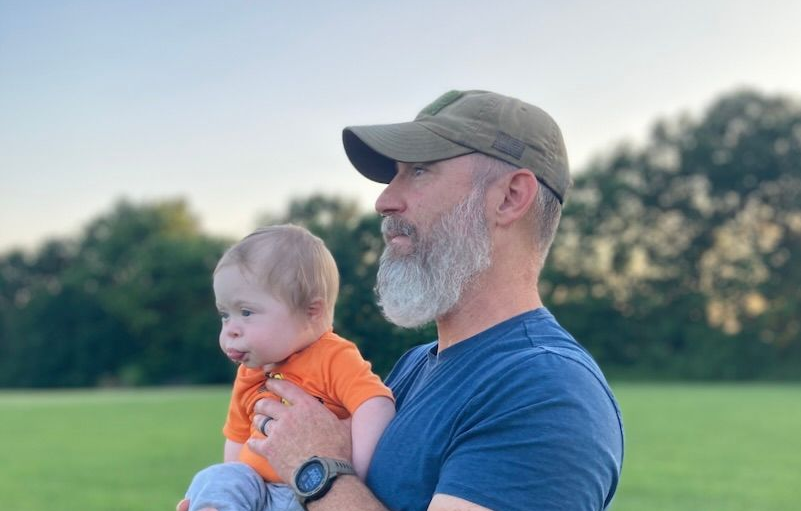
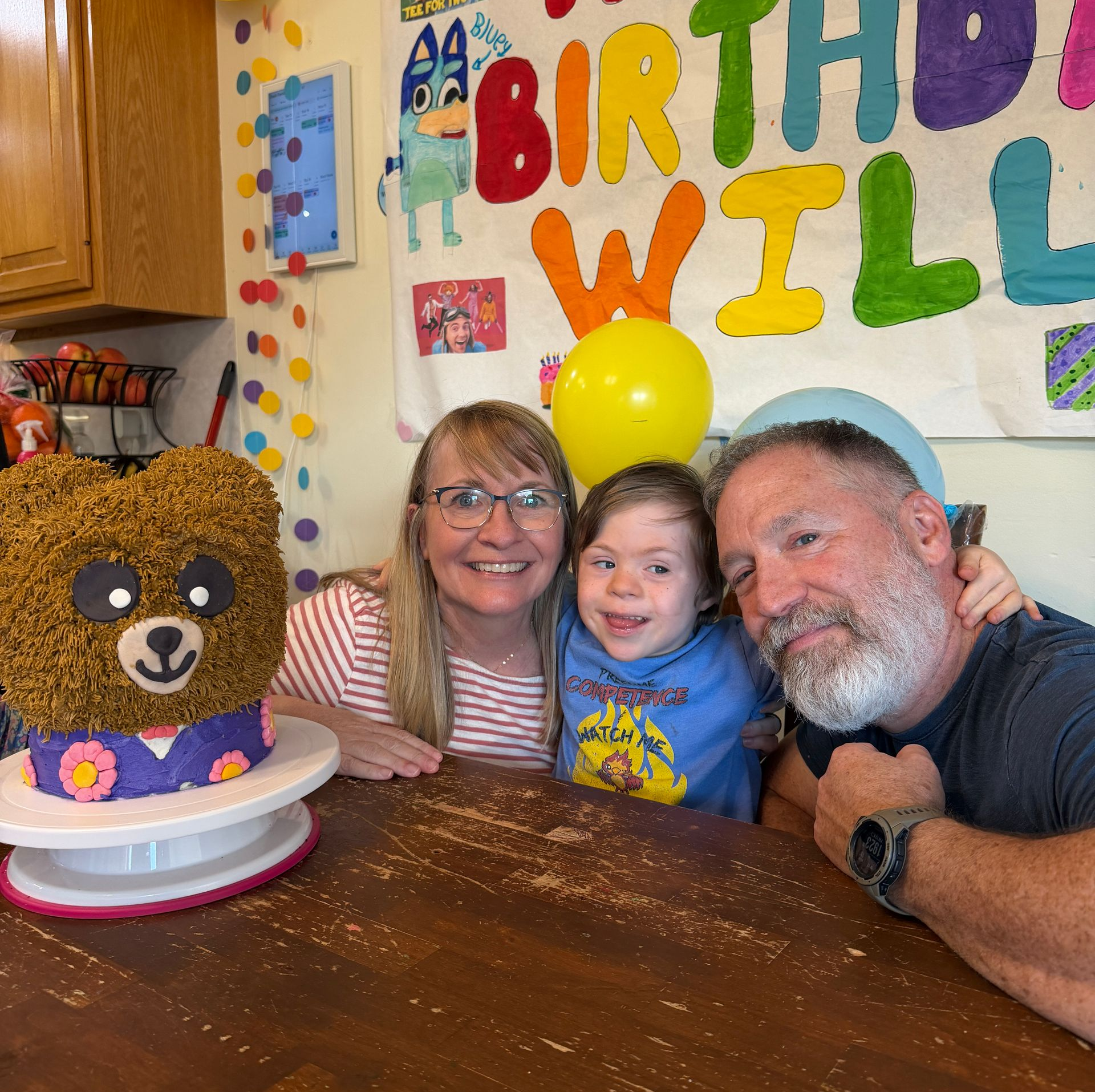
My son Will has Down syndrome. He is the reason Team Iron Will exists.
He is also one of the most free people I know — free in the way that matters. He is made in the image and likeness of God, and he loves without the hedges and conditions the rest of us take a lifetime to unlearn.
At his diagnosis, the world told us to think carefully. What it meant was: Consider whether he is worth it.
We didn't consider it. There was nothing to consider. His worth was self-evident — the way the Founders said it was supposed to be.
That's the work. That's what 250 years should have taught us by now.
Freedom's application cannot be conditional — not based on ability, not on location inside the womb or out of it, and not on the timing or sophistication of a prenatal screening panel. The moment we allow those conditions, we have abandoned the claim that the truths are self-evident. We've replaced them with a calculus, and a calculus can always be adjusted.
Abraham Lincoln understood this. In an 1858 speech defending the Declaration against those who wanted to narrow its reach, he warned that future generations would face people who tried to claim that only certain men were "entitled to life, liberty and the pursuit of happiness," and he insisted that no one should ever be allowed to "limit and circumscribe the great principles on which the temple of liberty was being built." He knew that the Declaration's words meant nothing if their application could be narrowed by those in power. He demanded that the country live up to its own founding document — not rewrite it, not qualify it, but mean it. We are called to the same task.
Today, that task includes defending the child with Down syndrome — at the moment of diagnosis, at birth, in the school system, in the medical office,and in the community. It includes building the infrastructure of welcome that makes "yes" feel possible when families receive a prenatal diagnosis that the world has taught them to fear.
It includes refusing to let the most vulnerable among us become the exception to the self-evident truth.
Two hundred fifty years of the greatest experiment in ordered liberty the world has ever seen. It is worth celebrating. It is worth defending. And it is worth completing.
The worthy pursuit of freedom has always been the work of expanding the circle of those it protects, and we are uniquely equipped to do exactly that. The principles are already there. The foundation was already poured. What remains is the living out.
For the families who said yes. For Will, and for every child like him. For the ones still waiting on us to mean what we say.
This is the order of things. Life first. Everything else follows.
Happy Independence Day.
Recent Posts